Photo by Evgeny Opanasenko on Unsplash
Is Apple Inc. capable of inventing a new hardware category that consumers actually want to buy? For the fiscal year ended September 28, 2024, Apple reported total revenue of $391.04 billion, yet $201.18 billion—or 51.45%—came directly from the iPhone, according to the company’s financial disclosures. When paired with Services revenue of $96.17 billion, the two segments generated more than 75% of Apple’s entire business. Beyond this protective ecosystem, evidence of an Apple innovation stall has grown increasingly difficult to dismiss.
The company that once revolutionized personal computing, digital music, and smartphones has spent recent product cycles delivering incremental component upgrades and catch-up software features. Meanwhile, hardware form factors such as foldables and lightweight smart glasses have been commercialized and expanded by rivals. With high-profile hardware bets failing to scale and foundational artificial intelligence outsourced to partners, Apple faces questions regarding how long its ecosystem moat can carry the enterprise.
- Revenue concentration: The iPhone and Services accounted for over three-quarters of Apple’s $391.04 billion fiscal 2024 revenue.
- Vision Pro retreat: International Data Corporation (IDC) estimated Apple shipped roughly 390,000 Vision Pro headsets in 2024 before shipments dropped to around 45,000 units in the fourth quarter of 2025.
- Competitor moats: Huawei and Samsung control the foldable phone market, while Meta reported over 1 million smart glasses sold in 2024.
- AI dependency: Apple’s consumer AI rollout relies on OpenAI integration rather than proprietary frontier foundation models.
The Hardware Void: Vision Pro Retreat and Category Absence
The clearest test of Apple’s recent hardware innovation engine was the Apple Vision Pro, priced at $3,499. Billed as the opening salvo in “spatial computing,” the headset encountered immediate market friction. According to market research firm IDC, Apple shipped approximately 390,000 units during its 2024 launch year. By late 2025, IDC estimated quarterly shipments had collapsed to roughly 45,000 units.
Manufacturing partner Luxshare halted production of the device at the start of 2025, according to IDC data reported by the Financial Times. Marketing data from Sensor Tower further revealed that Apple reduced digital advertising spending for the Vision Pro by more than 95% across key markets such as the United States and the United Kingdom. User feedback consistently criticized the device’s heavy front-loaded chassis, external battery pack tether, and thin native application catalogue.
Our read: The Vision Pro trajectory demonstrates the limitation of Apple’s traditional playbook. Apple historically enters an established category, refines the industrial design, and captures premium profit margins. With spatial computing, Apple entered an unproven consumer market with an extreme enterprise price tag, delivering engineering polish without a clear daily use case. [INTERNAL LINK: big tech mixed reality strategy]
Foldables and Smart Glasses: Where Rivals Built Defensible Moats
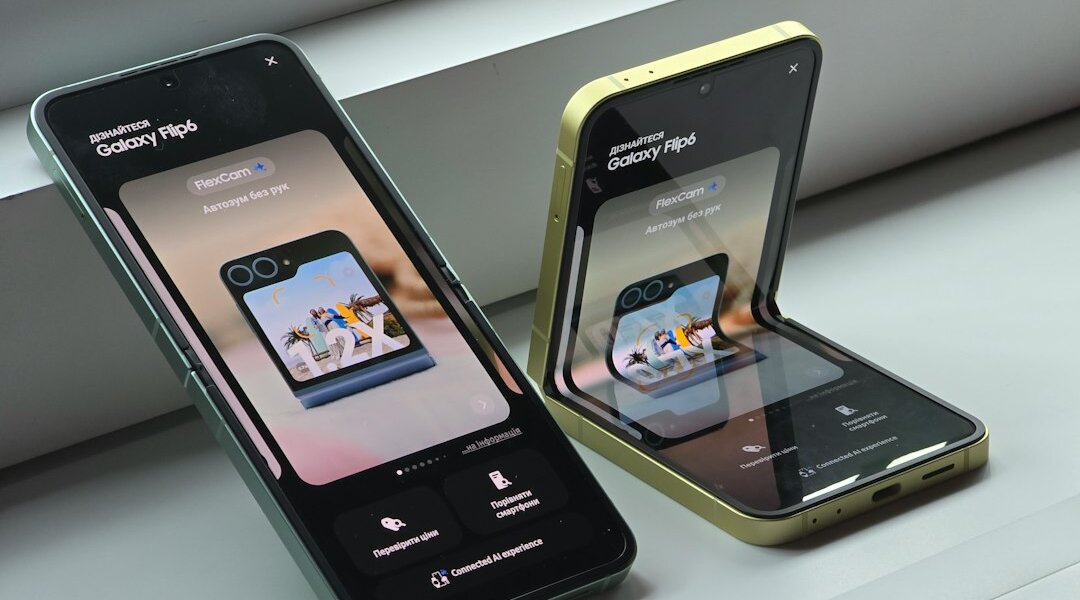
While Apple stumbled with spatial computing headsets, competitors established commanding positions across lighter, practical wearable and mobile categories. In foldable devices, Samsung Electronics and Huawei Technologies have iterated across multiple hardware generations. According to market tracker Canalys, Huawei captured 48% of global foldable smartphone shipments in the first half of 2025, while Samsung retained 20%. Apple has yet to ship a commercial foldable device in any format.
A similar gap has emerged in smart glasses. Meta Platforms partnered with EssilorLuxottica to introduce Ray-Ban Meta smart glasses starting at $300. In January 2025, leaked meeting remarks reported by The Verge revealed Meta CEO Mark Zuckerberg confirmed the product sold more than 1 million pairs in 2024. EssilorLuxottica subsequently disclosed that cumulative sales reached 2 million units by February 2025. Counterpoint Research tracked a 210% year-over-year surge in global smart glasses shipments in 2024, driven almost entirely by the Ray-Ban Meta lineup.
Instead of bulky displays, these glasses prioritize lightweight frames, camera capture, audio playback, and integrated conversational AI. Apple possesses industry-leading micro-acoustic engineering in AirPods and custom silicon, yet it remains absent from smart eyewear. Competitors are already collecting behavioral data and refining multimodal assistants directly on consumers’ faces.
The Apple Innovation Stall Across Silicon and Artificial Intelligence
Hardware differentiation inside Apple’s existing device lines has also narrowed. In personal computers, the transition to Apple silicon delivered substantial performance-per-watt gains between 2020 and 2022. Recent iterations—from the M3 to M4 chip families—represent predictable, single-digit to mid-teen architectural progressions. For mainstream laptop users, a Mac purchased three years ago performs routine tasks with virtually identical perceived speed compared to the latest release.
More pressingly, Apple has fallen behind cloud hyperscalers in artificial intelligence. While Microsoft backed OpenAI, Alphabet deployed Gemini, and Amazon invested in Anthropic, Apple entered the generative AI cycle without proprietary frontier foundation models. When Apple introduced Apple Intelligence in iOS 18.1 in late October 2024, CEO Tim Cook heralded it as a major upgrade catalyst. However, the initial features centered on notification summaries, proofreading tools, and photo cleanup.
For complex general queries, Apple relies on an external integration with OpenAI’s ChatGPT. This setup confirms that Apple does not control the foundational intelligence layer driving modern consumer software. By avoiding massive cloud capital expenditures—Apple’s fiscal 2026 capex remained a fraction of peers at approximately $9.0 billion according to financial filings—the company maintains short-term free cash flow but leaves its software differentiation vulnerable to third-party providers.
Market Impact: What This Means for Tech Portfolios and Enterprise IT
The stagnation of Apple’s non-phone hardware strategy creates distinct operational and financial considerations across the tech sector:
- Hardware buyers and enterprise IT: Enterprise refresh cycles are lengthening. Without step-function improvements in MacBook productivity or iPad software multitasking, IT managers are extending fleet replacement cadences beyond four years to conserve capital.
- Public equity investors: Apple stock increasingly trades like a defensive consumer staple rather than a high-growth technology innovator. Revenue resilience relies heavily on Services expansion—such as App Store fees and iCloud subscriptions—which face escalating antitrust and regulatory scrutiny across North America and Europe.
- Component suppliers: Display and assembly partners face lower volumes for exploratory products. As seen with Luxshare on the Vision Pro line, suppliers bear operational friction when Apple’s new categories fail to reach mass consumer adoption.
Bottom Line: How Long the Ecosystem Moat Can Hold
Can Apple survive this path? In the medium term, yes. Apple’s active installed base spans over two billion active devices globally, backed by formidable consumer switching costs and high customer loyalty. iPhone revenue alone reached $201.18 billion in fiscal 2024, generating immense operational cash flow that allows the company to fund $25 billion to $29 billion in quarterly shareholder distributions.
However, ecosystem lock-in protects the present; it does not secure the next computing platform. If conversational multimodal devices—such as smart glasses and ambient AI agents—gradually reduce user dependency on handheld glass screens, Apple risks becoming the premier hardware supplier to a legacy category. Unless Apple demonstrates it can commercialize a compelling, original form factor or establish an independent AI stack, its valuation will rest entirely on monetizing an aging perimeter.
This article is for information only and is not investment advice.
Sources
- Apple Inc. — Fourth Quarter Results Press Release (October 31, 2024) [CONFIRMED]
- Apple Inc. — Form 10-K Annual Report for Fiscal Year Ended September 28, 2024 (SEC Edgar) [CONFIRMED]
- The Guardian / Financial Times — Apple reportedly cuts production of Vision Pro headset after poor sales (January 1, 2026) [CONFIRMED]
- Counterpoint Research — Global Smart Glasses Market Soars 210% YoY in 2024 Driven by Ray-Ban Meta (February 26, 2025) [CONFIRMED]
- The Economic Times / Canalys — Huawei leads foldable smartphone market with 48% global share as Samsung falls to 20% in 2025 (September 29, 2025) [CONFIRMED]
- UploadVR — Ray-Ban Meta Glasses Sold Over 1 Million Units In 2024 (January 30, 2025) [CONFIRMED]